







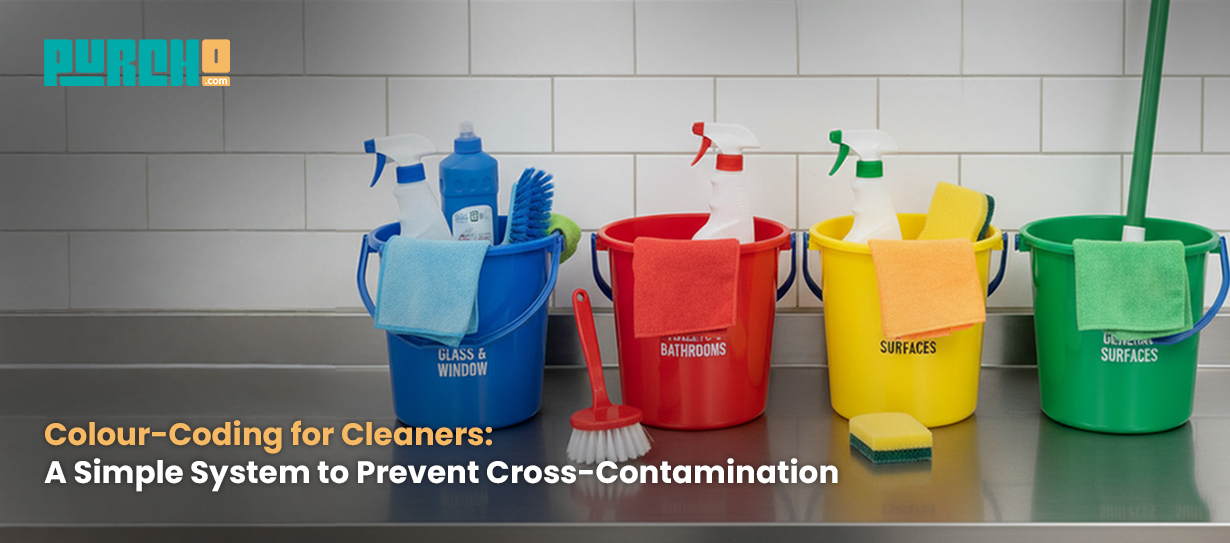
In the professional cleaning industry, achieving a visually clean space is only half the battle. True cleanliness means ensuring hygiene and preventing the unseen spread of germs and bacteria. One of the simplest, yet most effective, systems adopted across the UK to achieve this is colour-coding.
This guide is written for UK cleaning contractors, facilities managers, and care home teams who want to standardise colour-coded cleaning, reduce cross-contamination risk, and prove compliance to auditors.
Cross-contamination, the accidental transfer of bacteria, viruses, or even chemical residues from one surface to another, poses significant health risks. Imagine using the same cloth to wipe a toilet seat and then a kitchen counter, the potential for spreading harmful germs is enormous. Colour-coding provides a clear, visual guide for cleaning operatives, ensuring the right equipment is used in the right area, every time.
This guide explains the standard UK colour-coding system, why it’s crucial for safety and professionalism, and how to implement it effectively in your cleaning routines.
Why is Colour-Coding So Important?
Implementing a strict colour-coding policy isn’t just about looking organised; it’s a fundamental aspect of safe and hygienic cleaning practices, directly supporting your COSHH responsibilities. Here’s why:
- Prevents Germ Transmission: Different areas carry different levels and types of bacteria. Using distinct colours drastically reduces the risk of transferring pathogens like E. coli or Salmonella from a high-risk area (like a toilet) to a food preparation surface or general office desk.
- Avoids Chemical Contamination: It prevents residues from strong chemicals (e.g., bleach used in a toilet bowl) being accidentally transferred via a cloth or mop to sensitive surfaces where they could cause damage or harm (like a kitchen worktop). This aligns with COSHH principles of using and managing cleaning chemicals safely.
- Protects Allergy Sufferers: In environments like schools or care homes, preventing the spread of allergens between areas is vital. Colour-coding helps contain potential allergens within specific zones.
- Demonstrates Professionalism & Compliance: Adhering to the recognised UK colour-coding system shows clients, staff, and inspectors that your business takes hygiene seriously. It’s a widely understood best practice, particularly crucial in sectors like healthcare, education, and hospitality.
The Standard UK Colour-Coding System
While slight variations can exist, the most widely accepted colour-coding system in the UK cleaning industry, recommended by bodies like the British Institute of Cleaning Science (BICSc), uses four primary colours:
- RED: High-risk sanitary areas. Primarily used for toilets, urinals, and washroom floors immediately around them. These areas present the highest risk of bacterial contamination.
- YELLOW: Lower-risk washroom areas & clinical use. Used for surfaces like washroom sinks, taps, mirrors, tiles, and countertops. (Note: In healthcare settings, yellow often has specific uses related to clinical areas or isolation zones).
- BLUE: General lower-risk areas. Used for general cleaning tasks like dusting, polishing, and wiping surfaces such as desks, window ledges, office furniture, and high surfaces in non-food/non-washroom areas.
- GREEN: Food preparation and serving areas. Exclusively used in kitchens, food counters, bar areas, and anywhere food is handled or consumed. This strict separation is vital to prevent contamination in food zones.
Quick Reference:
| COLOUR | DESIGNATED AREA | RISK LEVEL |
|---|---|---|
| RED | Toilets, Urinals, Washroom Floors | High |
| YELLOW | Washroom Sinks, Taps, Mirrors, Tiles | Medium |
| BLUE | General Areas (Offices, Desks) | Low |
| GREEN | Kitchens, Food Prep & Serving Areas | High (Food Safety) |
Putting Colour-Coding into Practice
Successfully implementing this system requires more than just buying different coloured cloths:
- Get the Right Equipment: Colour-coding should apply consistently across all reusable cleaning equipment, cloths (microfibre & disposable), brushes, mops (heads and handles), buckets, gloves, and even trigger spray bottles if feasible. Purcho stocks a comprehensive range of colour-coded contract cleaning supplies, from durable microfibre cloths to mop systems, making it easy to equip your team correctly.
- Train Your Team Thoroughly: This system is only effective if every member of your cleaning staff understands it and adheres to it rigorously. Training should cover which colour applies to which area and why it’s important. This should be integrated into your general health and safety and COSHH training. Keep training records.
- Ensure Consistency: The system must be used consistently across all sites, shifts, and staff members. Regular spot checks can help reinforce its importance.
- Store Equipment Separately: Store red items away from green items, blue away from yellow, etc. This prevents accidental cross-contamination even before cleaning begins. Use colour-coded hooks or storage containers.
- Manage Laundry Correctly: Contaminated cloths need careful laundering. Ideally, wash red cloths separately from all others, especially green. Use appropriate temperatures and detergents as per NHS or industry guidelines to ensure proper disinfection.
Conclusion: A Simple System for Significant Safety
Colour-coding in cleaning is a remarkably simple visual system that delivers significant benefits in hygiene, safety, and professional standards. It’s a non-negotiable practice for any cleaning business serious about preventing cross-contamination and upholding its duty of care to both staff and clients.
By implementing and consistently enforcing the standard UK colour-coding system, you not only comply with best practices but also build trust and demonstrate a clear commitment to the highest levels of cleanliness.
Ready to implement or refresh your colour-coding system across multiple sites?
- Explore Purcho’s wide selection of colour-coded cleaning supplies for contract cleaners and facilities teams.
- Or request a tailored quote for your cleaning contract and spread the cost with a 30-day Business Credit Account.